
 Minimum Purchase Order = R1,000.
 Create Your Account to track your orders with GEARhub.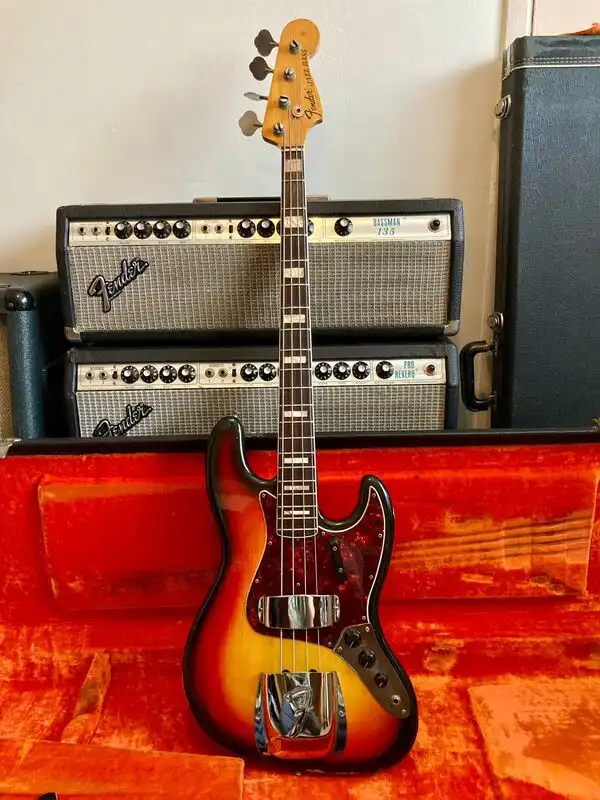

Description
Historical Significance:
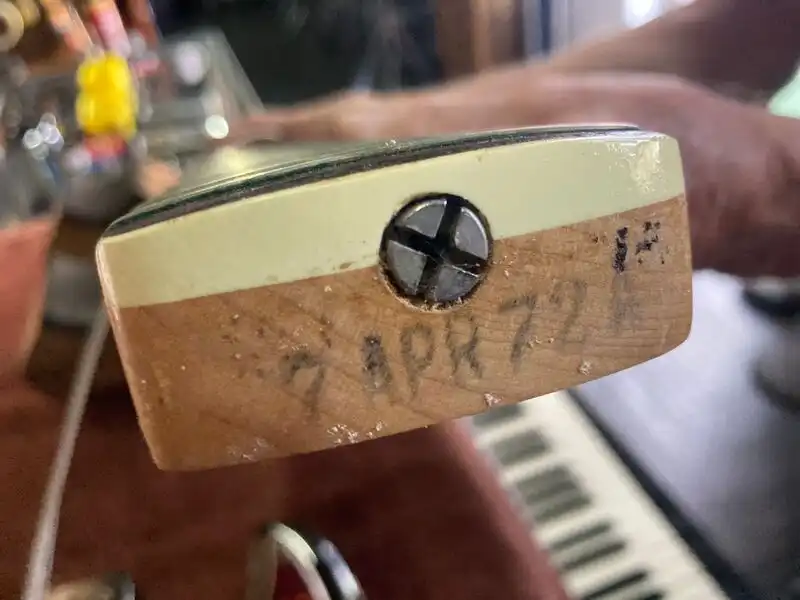
1972 is considered a transition year where the pickup spacing changed from 3.6″ to 4″ (from the edge of the bridge). This year is popular among collectors because it retains the 4-bolt neck construction before the full transition to 3-bolt necks later in the 1970s.
Body & Finish
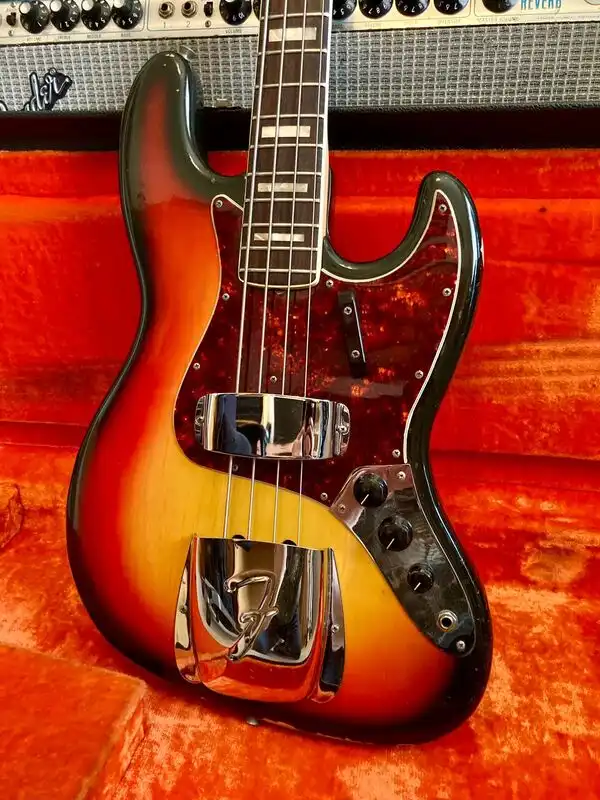
- Body Material: Alder body, 3-tone sunburst finish.
- Weight: Varies depending on the body wood, typically ranging from 8 lbs 10 oz (~3.9 kgs) to over 11 lbs (~5 kgs).
- Finishes: Available in various finishes, including 3-Tone Sunburst, Natural, Olympic White, Black, and custom colors.
Neck & Fingerboard
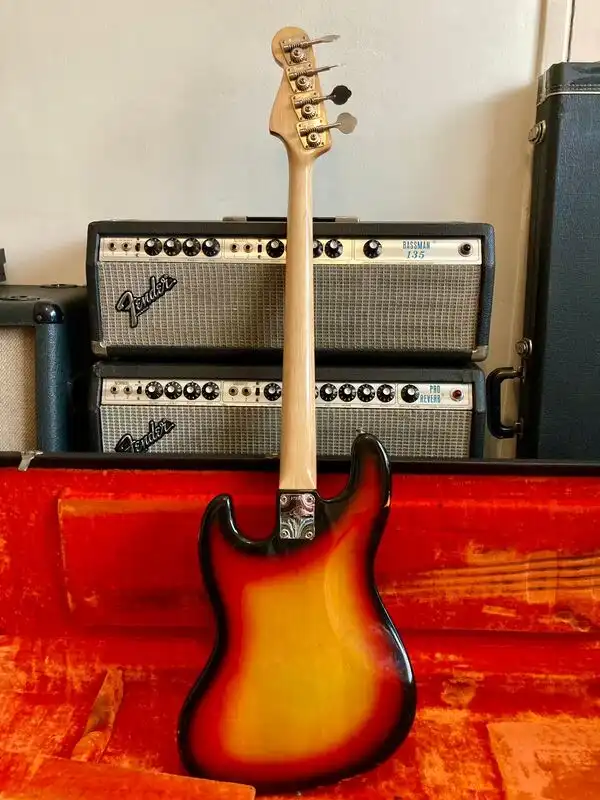
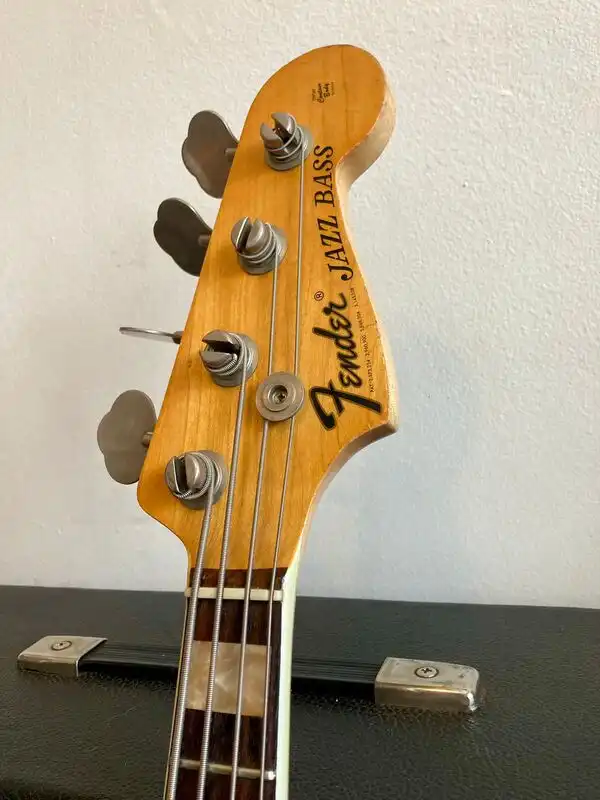
- Neck Material: Maple (often a one-piece maple neck with a glued-on fingerboard or a one-piece maple neck with an integrated fingerboard and skunk stripe).
- Fingerboard: Options included maple with black block inlays and binding,with pearloid block inlays and binding.
- Neck Profile: Generally a comfortable, round “C” shape.
- Scale Length: Standard 34 inches (864 mm).
- Nut Width: Slim 1.5 inches (38 mm).
- Frets: 20 frets.
- 4-bolt neck plate.
Hardware & Electronics
- Pickups: Two original Fender single-coil Jazz Bass pickups.
- Pickup Spacing: A key characteristic of this era is the transition to the “70s spacing”, where the bridge pickup was moved approximately 0.4 inches (10 mm) closer to the bridge compared to 60s models, resulting in a brighter, punchier tone.
- Controls: Passive electronics with two volume controls (one for each pickup) and one master tone control.
- Hardware: Chrome hardware, including the bridge and F-logo tuners. Chrome bridge and pickup covers.
- Pickguard: 4-layer brown tortoise.




Reviews
There are no reviews yet.